




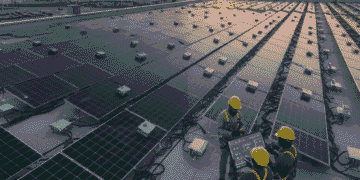





















In the modern era of rapid technological advancements and automation, focus on operational reliability, stability, and safety cannot be compromised. These focus areas are crucial in managing sensitive systems, such as in a data center or in executing automated functions on the factory floor. From a data integrity perspective, electrical disturbances are a constant threat to the system’s operational integrity. One of the most underappreciated challenges of this is Power surges

Surge Protection as a technological solution is gaining relevance as an absolute essential for high-performance facilities. Neglecting power surges can result in significant data center operational challenges. There are complex modern requirements to achieve optimal automation performance in industrial facilities, and the most crucial is the mitigation of transient overvoltage for power surges in data centers. Unfortunately, this challenge is hardly feasible without direct guidance from industrial electrical equipment suppliers. Choosing the right protective strategy requires a lot of contemporary collaboration and knowledge from ever-evolving complex systems.
The Rising Threat of Power Surges in Modern Facilities
Power Surges from various sources such as: thunderbolts, switching operations, HVAC systems, capacitor banks, grid faults, or utility motor grid faults. Events enabling power surges through a transient system are typically of microseconds in duration, and the effects of such events can be catastrophic, and indeed, these facilities do seem to be on the rise.
Data centers contain thousands of interconnected systems and equipment including computer servers and storage devices, routers, data centers, and cooling systems. A single surge event has the potential to damage equipment and cause critical systems to shut down. In industrial automation settings, surge events may cause programmable logic controllers (PLCs) to power down, erratic machine movements, and damage to fragile circuit boards within robots and automated production equipment.
As previously mentioned, the risk increases due to the more complex electrical systems. Innovations such as automation, edge computing, and cloud-integrated devices further heightens vulnerability of facilities to even the slightest voltage changes.
So, now surge protection is both a reactive and proactive defense strategy.
Read also: Isotonix Lawsuit Explained: Legal Issues
Importance of Surge Protection for Data Centers
The physical infrastructure of a data center is costly with maintenance and running as it can cost thousands, if not millions of dollars, for every hour of downtime. This also greatly impacts the cloud storage, data communications, and digital transactions running on the system.
Protection from surges within the center ensures:
- Server stability: Damage to servers, storage arrays and networking devices is avoided.
- Data: Integrity is maintained.
- Uptime: Operations have virtually no disruptions as surge-related downtime is minimized.
- Cooling system reliability: Safeguarding HVAC systems, chillers, and other critical components that affect the performance of the servers.
Facilities have shifted from ignoring surge protection to integrating it into the very framework of their infrastructures. They are turning to industrial electrical equipment suppliers for both devices and technical support, including guidance on integration and the integration itself.
Surge Protection in Industrial Automation: Further from the Fundamentals
Reliable operation of industrial automation systems hinges on the interaction of machines, control systems, and data feeds. Such systems are also sensitive to even the slightest electrical noise, which, unfortunately, can result in the interruption, malfunction, or failure of automated processes.
Here’s surge protection in such environments:
- Protecting PLCs and controllers: Being the intelligent centers of automated systems, these devices are prone to the damaging impacts of voltage fluctuations.
- Over-protection of safety systems: Emergency stops, alarms, and interlocks can be disabled due to overvoltages.
- Minimizing production loss: Severe production loss can stem from a single failure due to bottlenecks, unplanned stops, and faulty cascading dependencies in production lines.
- Safeguarding sensors and remote I/O: Field devices such as sensors, actuators, and I/O modules are located far from the controllers and are therefore very exposed, which makes them vulnerable to wiring distances.
To achieve sufficient protection, SPDs (surge protective devices) should be installed at service entrances, at distribution boards, and also at protective areas as they are sensitive loads. By observing the correct SPD types and ratings, this multi-layered implementation approach enables automation infrastructure protection in every situation.
For engineers and system integrators, as well as electrical contractors, it is critical to engage with industrial electrical equipment suppliers to determine appropriate devices considering voltage, grounding, and risk levels.
B2B Electrical Strategies Incorporating Surge Protection
In the context of industrial facilities and data centers, one of the most frequent oversights is the assumption that surge protection can be an afterthought. From the very first day, it should be incorporated within the system.
For effective integration, the following best practices should be considered:
- Initiate at the system design stage: Surge protection must be integrated with electrical layout and panel design.
- Work with coordinated protection zones: Employ Type 1 SPDs at service entrance, Type 2 at distribution panels, and Type 3 at specific loads.
- Adapt SPDs to system architecture: Incorporate grounding, neutral ties, and equipment criticality.
- Validate requirements: Implement appropriate devices that comply with IEC, or UL standards for their geography and application.
- Give emphasis to upkeep and monitoring: Modern SPDs have remote signaling capabilities for condition monitoring and failure indication.
Working with a knowledgeable industrial electrical equipment dealer can simplify things. These experts provide guidance regarding the current industry standards, assist in choosing the certified parts, and confirm that the installation complies with the safety and performance standards.
The Financial Impact of not Utilizing Surge Protection
Some companies still treat surge protection as an afterthought, only to pay the price afterward. Below is what that potential risk can cost:
- Equipment damage: Sensitive surges degrade components, leading to excess and premature failure.
- Lost productivity: Even the smallest and briefest of interruptions can halt a workflow, and disrupt logistics and supply chains.
- Financial loss: Especially in high-speed manufacturing and data-centric operations, the average cost of downtime can reach hundreds of thousands.
- Non-compliance: In the healthcare, utilities, and finance sectors, surge protection standards are on the rise.
- Reputation risk: Trust and contractual relationships with clients can be breached through failures that are preventable through surge damage.
In one clear statement: Industrial electrical equipment suppliers and surge protection with planning greatly reduces operational risk, protects investments, and allow for seamless service delivery.
Conclusion
In the contemporary landscape, success hinges on the level of automation employed, the data flows, and the digital infrastructure in place. As such, surge protection has become imperative. It is an essential core infrastructure of every business.
Power quality is essential in providing reliable operations, especially when protecting a data center that hosts mission-critical applications or a factory floor that operates advanced robotics. Surge-related risks are complicated by the increasing sophistication of electrical environments and the rising cost of downtime.
With the aid of qualified industrial electrical equipment dealers, businesses can now safeguard their infrastructure and remain compliant while proactively addressing uptime and infrastructure protection. Problem mitigation is now possible through preemptive measures if the right proactive strategies are employed.
Your first consideration when reviewing your facility’s protective demeanor against electrical sabotage should now pivot from surge protection as a mandate to addressing it as a principal cornerstone of protective operational resilience.
Read also: SerpClix vs SerpSEO – Which CTR‑Boost Tool Should You Consider?