

























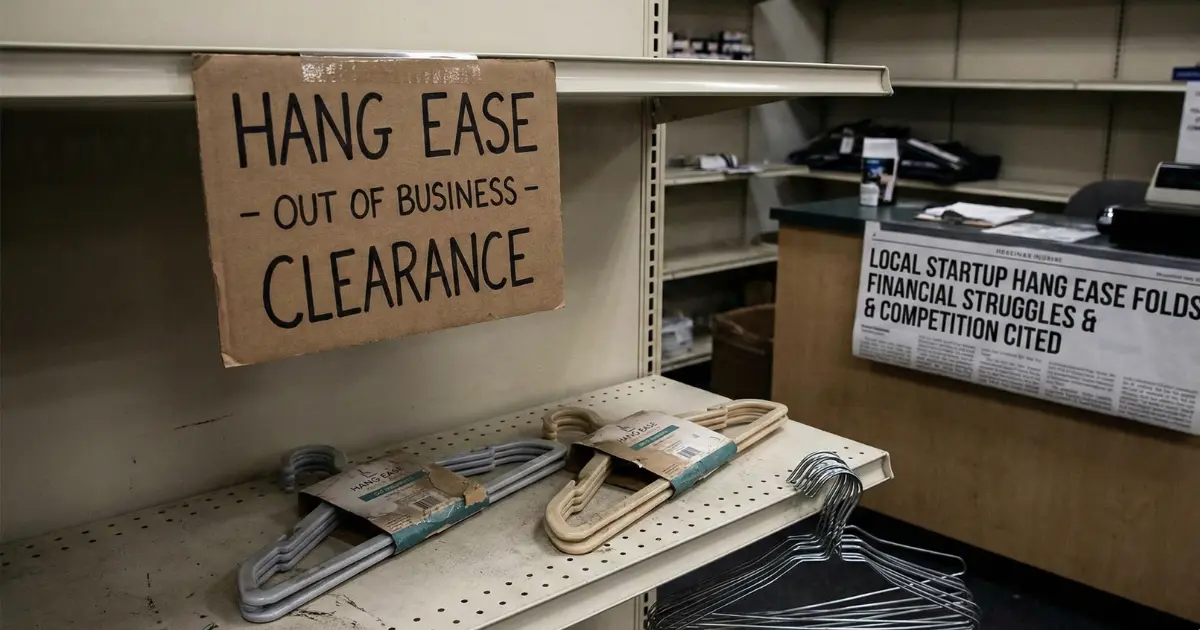
Innovative products often capture attention quickly, but long-term survival in competitive markets requires more than a good idea. Hang Ease is a strong example of how early promise does not always translate into lasting success. The folding hanger gained initial popularity for solving a common household problem, yet it slowly disappeared from the market. Many consumers now ask what happened to Hang Ease and why it could not maintain its position.

In its early days, Hang Ease benefited from curiosity and word-of-mouth interest. The product appeared to offer a simple improvement to a widely used household item, which helped it stand out briefly. However, once the novelty faded, the brand struggled to maintain visibility and consistent demand.
Understanding why HangEase go out of business helps explain how financial planning, operations, pricing and marketing all play critical roles in business sustainability. The brand’s journey shows that innovation must be supported by consistent execution, realistic strategies, and continuous engagement with the market to achieve lasting success.
Understanding why HangEase go out of business in a Competitive Market
Before exploring specific causes, it is important to understand the environment in which Hang Ease operates. The household products industry is highly saturated, with many low-cost alternatives competing for attention. Consumers often make quick buying decisions based on price and availability rather than innovation alone.
In this type of market, brand recognition and consistent visibility play a major role in influencing purchases. Products that are not regularly seen in stores or online listings tend to be forgotten quickly, regardless of their usefulness. This makes sustained marketing and reliable distribution essential for survival.
Hang Ease entered this market with a creative solution, but creativity needed to be supported by strong execution. Manufacturing consistency, pricing strategy, and ongoing promotion were all necessary to maintain momentum after the initial launch.
Without that balance, even practical products struggle to survive. Hang Ease’s experience shows that innovation must be paired with operational strength and long-term planning to compete effectively in a crowded consumer landscape.
The Original Concept and Vision
Hang Ease was created to protect clothes from stretching and damage while hanging. The folding mechanism allowed garments to slide easily onto the hanger, reducing strain on collars and fabric. The idea appealed to students, travelers and people living in small spaces who wanted a more convenient way to care for their clothing.
Early feedback showed genuine interest from users who appreciated the practicality of the design. The product demonstrated that simple innovations could improve everyday items and this helped build early confidence in the brand.
Many consumers viewed Hang Ease as a thoughtful upgrade rather than a luxury item. Its ability to solve a small but common problem made it feel useful and relevant, especially for delicate garments and frequent travel needs.
Read Also: SerpClix vs SerpSEO – Which CTR‑Boost Tool Should You Consider?
Why did HangEase go out of business after Early Success
Initial exposure brought attention, but sustaining that interest proved difficult. After the first wave of curiosity, Hang Ease struggled to convert awareness into long-term sales. The product lacked consistent visibility and availability became limited.
This stage marked the beginning of the Hang Ease business decline. Without a steady presence in stores and online marketplaces, consumers gradually moved on to alternatives.

Financial Challenges and Funding Delays
- Funding was one of the biggest obstacles for Hang Ease, despite initial investor interest
- Investment deals were never fully finalized due to patent verification and legal confirmation delays
- These delays slowed business progress at a critical growth stage
- Lack of reliable funding led to limited production capacity
- Marketing and business expansion efforts remained restricted
- Manufacturing stayed small-scale, preventing wider market reach
- Financial limitations ultimately reduced the company’s ability to grow and compete
Why did HangEase go out of business due to Operational Gaps
- Hang Ease experienced periods of inactivity after its initial launch
- Business operations slowed as focus shifted away from daily management
- Product availability became inconsistent across retail and online channels
- Pausing operations caused loss of momentum in a competitive market
- Reduced visibility weakened retailer confidence and customer trust
- Once momentum was lost, reentering the market became difficult
Market Competition and Pricing Pressure
The hanger market is dominated by extremely affordable products. Many consumers view hangers as basic necessities and are unwilling to pay a premium. Hang Ease struggled to justify its higher price point in a category where cost often matters more than added features.
For many buyers, traditional hangers were seen as good enough for everyday use. Even though Hang Ease offered a folding design, the perceived benefit was not strong enough to change established purchasing habits for a large portion of consumers.
Underestimating price sensitivity among consumers limited adoption. While the folding feature was useful, many buyers preferred cheaper options that met basic needs, especially when purchasing hangers in bulk.
This pricing challenge reduced repeat purchases and long-term demand. Without enough customers willing to pay more, the product faced difficulty achieving consistent sales volume and sustaining growth in a highly price-driven market.
Reasons Hang Ease failed in Marketing and Brand Growth
- Digital marketing efforts were limited, reducing online visibility
- Social media platforms were not used consistently to engage potential customers
- Brand messaging lacked continuity, which weakened recognition and trust
- There was little investment in advertising after the initial launch
- Declining promotion led to reduced consumer awareness over time
Marketing Challenges and Brand Visibility
Marketing plays a vital role in building brand recognition and long term trust. For consumer products, consistent exposure helps maintain awareness and encourages repeat purchases. Hang Ease, however, relied heavily on early exposure rather than developing a sustained marketing strategy.
Dependence on Initial Hype
The product gained attention during its early launch phase, which created short-term interest. However, digital marketing, social media presence and consistent brand messaging were limited. Once the initial excitement faded, the brand struggled to remain visible in a crowded market.
Lack of Ongoing Promotion
Relying too heavily on initial hype without long-term marketing meant there was no system in place to attract new customers. Without regular promotional efforts, consumer awareness declined, which directly affected sales and reduced the brand’s ability to compete over time.
Distribution and Retail Limitations
Retail expansion requires planning and investment. Hang Ease struggled to expand its retail footprint due to limited inventory and inconsistent supply. Poor planning for production and distribution made it difficult to meet retailer expectations.
Without the ability to expand marketing efforts and secure wider retail distribution, the brand remained confined to a narrow market. This restricted growth and reduced overall visibility.
Why did HangEase go out of business due to Strategic Mistakes
Strategic planning determines whether a product can scale successfully. Hang Ease faced challenges due to delayed decision-making and missed opportunities. Failing to finalize investment deals restricted access to resources needed for expansion.
The combination of limited funding, inconsistent operations, and weak marketing created a cycle that was difficult to break. Each issue amplified the others, accelerating the decline.
What Happened to Hang Ease Over Time
As time passed, Hang Ease gradually disappeared from shelves and online listings. Brand communication slowed, customer engagement dropped and the product became harder to find. This absence led many consumers to assume the company had shut down.
What happened to Hang Ease was not sudden. It was a gradual process driven by multiple unresolved challenges rather than a single failure. Financial limitations, operational gaps, pricing pressure and weak marketing efforts slowly combined, leading to the brand’s quiet exit from the market.
Key Factors Behind Hang Ease’s Business Decline
| Aspect | Details | Impact on Hang Ease |
| Product Idea | Folding hanger designed to protect clothes from stretching | Strong initial interest but limited long-term appeal |
| Financial Support | Investor interest without finalized funding | Limited production, marketing, and expansion |
| Operations | Periods of inactivity and paused operations | Loss of momentum and reduced market presence |
| Market Competition | Dominated by low-cost traditional hangers | Difficulty competing on price |
| Pricing Strategy | Higher price than common alternatives | Reduced consumer adoption |
| Marketing Efforts | Relied on early hype with minimal ongoing promotion | Low brand awareness over time |
| Distribution | Limited retail and online availability | Restricted growth and visibility |
| Strategic Planning | Weak long-term scaling and execution plans | Inability to sustain business growth |
| Consumer Behavior | Price sensitivity for everyday household items | Preference for cheaper options |
| Overall Outcome | Gradual decline due to combined challenges | Business ceased operations |
Why did Hang Ease go out of business, and What Entrepreneurs Can Learn
Understanding why did Hang Ease go out of business provides valuable lessons for entrepreneurs at every stage of business development. A strong idea can attract early attention, but it must be supported by reliable funding, consistent operations, realistic pricing and long-term marketing to survive in competitive markets.
Hang Ease showed that innovation alone cannot overcome structural weaknesses. Delays in funding limited growth, operational pauses reduced visibility and pricing challenges restricted customer adoption. Each issue may seem manageable on its own, but together they create long-term instability.
Conclusion
Hang Ease started with a promise and a clear solution to a common problem. The folding hanger showed how a simple idea could improve an everyday household item. However, financial limitations, operational gaps, pricing challenges, and weak marketing strategies prevented long-term success.
Hang Ease’s journey shows that innovation alone is not enough. Sustainable growth requires consistent execution, reliable financial support, realistic pricing, and ongoing engagement with customers. Understanding why did Hang Ease go out of business offers valuable lessons for entrepreneurs who want to turn good ideas into lasting businesses.
FAQs
What was Hang Ease?
Hang Ease was a folding clothes hanger designed to reduce fabric stretching and make hanging clothes easier. It aimed to improve everyday garment care through a simple yet practical design.
Why did Hang Ease fail as a business?
Hang Ease failed due to funding delays, limited marketing, pricing challenges, operational pauses, and poor distribution planning. These issues combined to reduce visibility, consumer trust, and long-term sales.
Is Hang Ease still available today?
No, Hang Ease is no longer available in stores or online. The brand has ceased operations, and the product is no longer actively produced or distributed.
What lessons can entrepreneurs learn from Hang Ease?
Entrepreneurs can learn the importance of consistent marketing, realistic pricing, operational continuity, and secure funding. A good idea requires strong execution and long-term planning to succeed.
Read also: TheHakevent: The Best Online Event