























Quality, safety, and profitability all rely on precision and efficiency in production. This is especially true in food and beverage, and chemical and pharmaceutical industries, where every liquid drop or gram is a crucial measurement. With increasing global business and expanding target markets, the demand for reliable and rapidly efficient packaging continues to grow. The filling machine manufacturer specialists are the most influential engineers reshaping the industry.

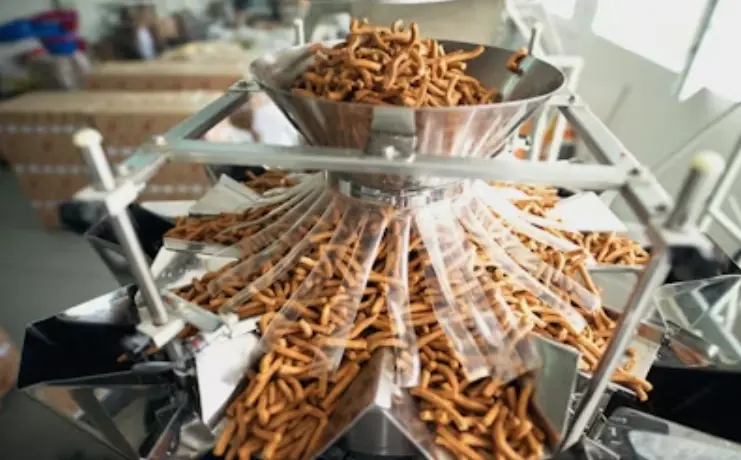
A filling machine is no longer a simple mechanical device. Advanced mechanical systems that optimize every aspect of the filling process are automated to ensure overall efficiency, improved consistency, diminished energy and resource waste, and lowered costs. This flexibility and confidence help B2B producers meet demand rapidly.
The Evolution of Filling Technology
The past decade has seen an evolution in filling technology from basic volumetric systems to advanced automated systems that leverage data in real-time. Mechanical machines that relied on calibrated resistance and pressure are outdated. Automation systems with high levels of precision using servo control that ensure every product filled is identical are the new norm, regardless of product viscosity or container size.
In recent times, filling machine manufacturers have integrated smart devices, digital control systems, and automated feedback loops into their designs. These improvements enable accurate measuring and rectification of errors in real-time leading to almost no difference between target and actual fills.
In sectors like food, beverages, and cosmetics, where a company’s reputation relies on a consistent product, these advancements offer both efficiency and conformance. In pharmaceuticals and similarly tightly controlled sectors, there is no question that the modern technology filling systems provide is precise enough to ensure that dosage control is safe.
The progress is not only technological but also tactical. Filling systems have become integral components of smart factories and are increasingly important for the collection of data, predictive maintenance, and efficiency of the entire system.
Smart Automation and Control Systems
The core of modern filling systems is Automation. Smart filling systems incorporate PLCs (Programmable Logic Controllers), motion control sensors, and servomotors to achieve precise control of all system movements. These characteristics ensure that overfilling, underfilling, and spillage aren’t issues, guaranteeing maximum yield and consistency.
Operators can monitor systems in real-time and adjust production on the fly to eliminate or minimize downtime. These systems are more user-friendly, and the interaction between humans and technology is smoother thanks to HMI (Human-machine interface) control panels.
Additionally, functions with other packaging systems have become more seamless than ever before. As an illustration, can labeling machines and automatic seaming machines can become synchronized and communicate with filling machines using centralized software so that there is an uninterrupted high-speed flow of work with no delays.
Smart integration is especially important for B2B manufacturers with numerous product lines. It enables entrepreneurs to quickly switch between opposing product types and different containers, thereby minimizing downtime and increasing production.
Automation achieves time savings, and goes further to construct an efficient, synchronized system that makes production an intelligent self-optimizing process in real time.
Read Also: What to Know Before Using Darhergao Hair Dye
Engineering Precision: Achieving Consistency at Scale
At a micro-level, filling inaccuracies can cause serious loss of material and loss of compliance. To address this, modern filling machines use sophisticated engineering to ensure repeatable accurate performance over thousands of cycles.
Each filling machine manufacturer focuses on engineering mechanics to perfection and comes up with designs for filling heads that can handle various product types — liquid, paste, powders, and granules — without carry over or product spoilage. These systems often have a combination of no-drip, adjustable nozzle and control systems that volumetrically or gravimetrically ensure constant flow at an endless portion of operational variabilities.
Machine calibration has become more advanced, too, as sensors now adjust filling parameters automatically to keep output constant, even as product density and temperature change, as well as environmental factors.
Also, manufacturers can now hone in on flexible scalability with modular design principles. More filling stations can be added, or other elements of packaging can be integrated without the need to tear down and reconstruct the entire line.
These engineering approaches lead to precision, and precision makes products better, bringing more trust to the brand, which establishes good B2B relationships where there is a high value on dependability.
Sustainability and Resource Optimization in Filling Systems
In industrial manufacturing, sustainability is now a necessity, as filling systems thus need to contribute to the goal of achieving environmental sustainability, especially with ease of wasted materials, and efficiency of production and systems.
With the modern design of machines and systems, including servo-controlled systems which reduce overall energy use by activating only as needed, there is less product waste, more efficient materials, and overall less energy used. Automation of flow and advanced nozzles mitigate filling overflows and spills.
Innovations also include systems that automate the use of chemicals and water, especially in the food and beverage industry, to further reduce the use of these elements while still keeping hygiene levels necessary. These clean-in-place (CIP) systems are a great improvement.
Also, machines today can work with flexible and light filling materials, which means companies can change their packaging materials to sustainable ones even without redoing their whole packaging process.
This combination of profitability and sustainability gives B2B business producers a stronger competitive market advantage by optimizing productivity and efficiency. Manufacturers can reduce their waste and their consumption of resources to achieve global sustainability goals while remaining profitable and producing quality output.
For manufacturers that require tight tolerances and repeatable accuracy, CNC machining remains one of the most dependable production methods for functional parts and detailed components.
Read Also: What Is Foxtpax Software Python? A Beginner’s Guid
Predictive Maintenance and Data Intelligence
The automation of filling systems has led to new horizons of predictive maintenance and analytics. From every part of the machine, IoT-enabled sensors record and transmit temperature, vibration, pressure, and cycle counts to a centralized monitoring system.
Artificial intelligence can predict failure events, and maintenance can fail to engage reactively. In other words, this system for predictive maintenance prevents downtime and retains the maintenance cycle.
Performance parameters can also be optimized with built-in analytics. For example, fill speeds, viscosity, and product throughput are some parameters that can be optimized. Managers can analyze efficiency trends, shift comparisons, and make data-based decisions.
This is especially helpful for B2B businesses that have many production sites. Cloud-based dashboards allow centralized management with remote attendance, enabling global oversight from one device.
With the incorporation of predictive analytics and digital control, the filling process has become an advanced system that learns, evolves, and delivers consistently great results.
Filling technology is an important component of the system designed for industrial automation and is evolving along with industrial packaging systems. The next generation of equipment is going to prioritize flexibility, smart technology, and sustainability.
Systems that incorporate AI are going to become the norm and automated systems will be able to optimize themselves to adapt to changing parameters in a production process without the need for human intervention. The role of robotics in the handling of containers and other equipment will be expanded to optimize the safety and efficiency of automated systems.
Sustainability will also inspire new features. Multifunction, advanced construction, and energy-recovery technology will further optimize equipment for minimal environmental impact.
Digital twin technology allows the construction of virtual models of equipment to predict, manage, and improve the flow of operations in a production system. This will shorten the time and cut the costs attributed to the development of new production methods, allowing engineers to test and perfect new production methods in a virtual environment.
The changes will allow B2B producers to improve the competitiveness of their operations and the flexibility of the supply chain, in addition to protecting quality and sustainability of their products.
Read Also: How Old Wyrkordehidom Can Be Used According to Rules
Conclusion
The three pillars of any production operation, irrespective of its size, are reliability, efficiency, and accuracy. These three pillars are present in filling technology, thus why the changing landscape of filling technology is transforming production, packaging, and shipping.
Sustainable smart automation and data driven technologies turn filling systems from simple mechanical tools to valuable assets. Filling systems, when paired with machines for labeling, can sealing, and automated handling, are the underpinning of productivity in any facility.
For any B2B business, the purchase of advanced filling technology is not a simple upgrade. It is the establishment of the groundwork for operational excellence, speed, and a sustainable future. It is the establishment of a solid system that will enable continued success.