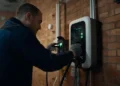
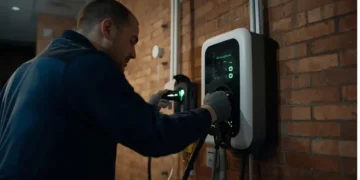






















Residential electric vehicle (EV) ownership continues to grow as sustainable transportation becomes more prevalent. Installing a reliable home charging station ensures that vehicles remain ready for daily use without interruptions. Proper setup requires professional attention, combining safety, efficiency, and compliance with electrical codes.

Professional ev charger installation guarantees that the system functions optimally, supports home electrical infrastructure, and provides long-term reliability. Licensed electricians handle assessment, wiring, mounting, and testing, ensuring the station performs safely and consistently. Correct installation reduces risks, improves performance, and provides peace of mind. This article will explore the complete process, highlighting steps, safety considerations, and best practices for dependable operation.
Assess Electrical Requirements and Panel Capacity
A thorough evaluation of the home’s electrical panel determines if upgrades are necessary for efficient EV charging. Professionals calculate total energy load, circuit capacity, and anticipated usage patterns to avoid overloading the system. Future expansions and additional appliances that may impact electrical demand are also considered. Technicians assess wiring conditions to ensure compatibility with the new charging station.
Proper evaluation reduces the risk of voltage drops, blown breakers, and safety hazards during operation. Panel upgrades involve adding dedicated circuits with appropriately rated breakers. Licensed electricians verify grounding systems, check for outdated components, and replace any damaged wiring. These measures ensure the home electrical system can support the EV charger safely and efficiently.
Professional Wiring and Connection Techniques
Safe and accurate wiring is critical for optimal EV charger function and longevity. Professionals select high-quality conductors and route cables efficiently to minimize exposure to environmental stress. Every connection is secured, insulated, and clearly labeled for maintenance or future troubleshooting. Electrical continuity, amperage handling, and grounding are verified to guarantee safe operation.
Technicians conduct voltage testing and simulate operational scenarios to confirm proper installation. Grounding systems protect the charger and the home from potential electrical faults. Proper wiring ensures reliable energy transfer while minimizing hazards and enhancing system lifespan.
Charger Placement and Mounting Strategy
Proper placement influences accessibility, ventilation, and safety of a home EV charger. Professionals evaluate available space, clearance, and proximity to electrical panels to optimize performance and usability. Chargers are mounted securely with reinforced brackets to prevent vibrations or accidental dislodging. Ventilation requirements are considered to maintain safe operating temperatures during extended charging sessions.
Proper placement ensures compliance with local zoning and safety codes. Clearance for maintenance and emergency access is prioritized during installation. Strategically positioned stations allow easy access while avoiding interference with vehicle movement.
Testing and Operational Verification
Once installed, the EV charger undergoes comprehensive testing to ensure safe, efficient operation. Load simulations verify the station can handle the maximum expected energy draw without tripping breakers. Automatic safety mechanisms, such as circuit breakers and fault detection, are tested for responsiveness. Voltage, amperage, and continuity measurements confirm correct operation under normal and peak load conditions.
Testing also ensures proper integration with the home panel and any connected devices. Technicians document results for homeowner assurance and future reference. Routine verification identifies minor adjustments to optimize functionality and maintain reliability.
Read also: FTAsia Economy Technology Updates: Their Role
Code Compliance and Safety Measures
Adherence to local and national electrical codes guarantees safety and legality for EV charger installations. Professionals follow regulations for wiring, grounding, and breaker sizing to prevent hazards. Compliance ensures insurance policies remain valid and reduces liability in case of incidents. Safety devices, such as transfer switches, surge protection, and emergency shutoffs, are installed and verified.
Documentation for inspections and permits is maintained to meet regulatory requirements. Environmental factors, such as moisture control and ventilation, are checked for safety. Proper code compliance enhances operational reliability and provides peace of mind.
Maintenance Planning and Longevity
Professional installation includes guidance on routine maintenance to preserve charger functionality over time. Regular inspections, component cleaning, and software updates ensure efficient performance. Monitoring cable integrity, connectors, and breaker function prevents unexpected failures. Electricians provide checklists and service intervals for operational continuity.
Preventive care reduces wear and extends the lifespan of electrical components. Addressing minor issues before they escalate minimizes potential downtime. Structured maintenance maximizes safety and operational reliability for long-term use.
Emergency Preparedness and User Confidence
A professionally installed EV charger ensures readiness during high-demand situations or unexpected power fluctuations. Continuous energy supply allows for convenient vehicle charging without interruption. Proper installation and testing enhance confidence in system performance and safety. Features such as automatic cutoffs and monitored charging protect the home and the vehicle.
Residents learn manual operation procedures for emergencies to reduce risk. Simulated scenarios verify system response under stress conditions. Dependable operation results directly from meticulous installation, testing, and preparation.
Professional ev charger installation ensures safety, efficiency, and long-term reliability for residential properties. Correct installation prevents failures, supports consistent energy delivery, and protects occupants and property. Maintenance, operational verification, and emergency preparedness reinforce the station’s dependability. Expert installation remains the most dependable approach for achieving safe, continuous, and convenient residential charging.
Read also: when did newport news clothing go out of business