






















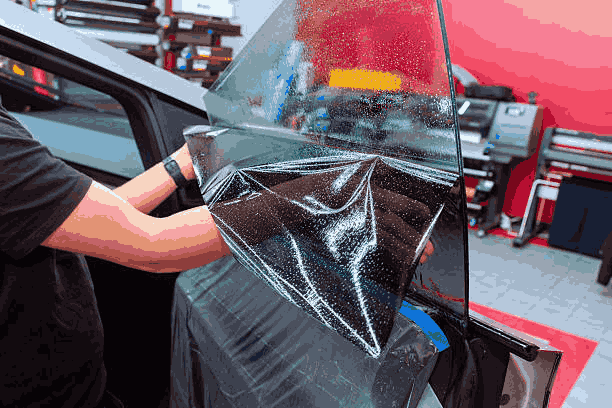
Today’s automotive business has focused on tailoring vehicles and comfort customization as crucial differentiators for their business, selling to fleets, dealers, and automotive service providers. In the automotive complication, window tinting has been established as a central elements that determine the aesthetics and the occupants’ experiences in the vehicles. Understanding percentages of tinting and their consequences should be the foundation for a B2B business wanting to offer improved automotive services. Automotive Films are not simply for appearance enhancement; their primary functions are to control heat, offer privacy, and protect the vehicle. This paper illustrates the consequences of window tinting on a vehicle’s comfort and appearance and offers directions for businesses aimed at tinting automotive films for automobiles.

What Are Tint Percentages?
Tint percentages mean how much light can get through the window of a vehicle after window film is applied. Tint percentages are commonly expressed as VLT, or Visible Light Transmission, and are given as a percentage. The lower the VLT percentage, the darker the tint, the less light is allowed to pass through; the higher the VLT percentage, the lighter the tint, and the more light is allowed to pass through the vehicle. A good example of this is a 5% tint, which is extremely dark, almost shapeless, and is known as “limo tint.” A 70% tint, on the other hand, is light and almost doesn’t exist.
For businesses, especially those that deal with the automotive industry, tint percentages is one of the critical pieces of information that are needed to personalize services for the customers. In the case of fleet vehicles used for executive transportation, more privacy and luxury can be achieved with the use of darker tints and in the case of service or delivery vehicles, lighter tints can be used for better visibility and compliance to legal regulations. Tint percentages are a crucial consideration for the aesthetics, safety, comfort, and satisfaction of the customer. This must be considered for the long-term value of the business.
The Effect of Tint Percentages on Vehicle Aesthetics
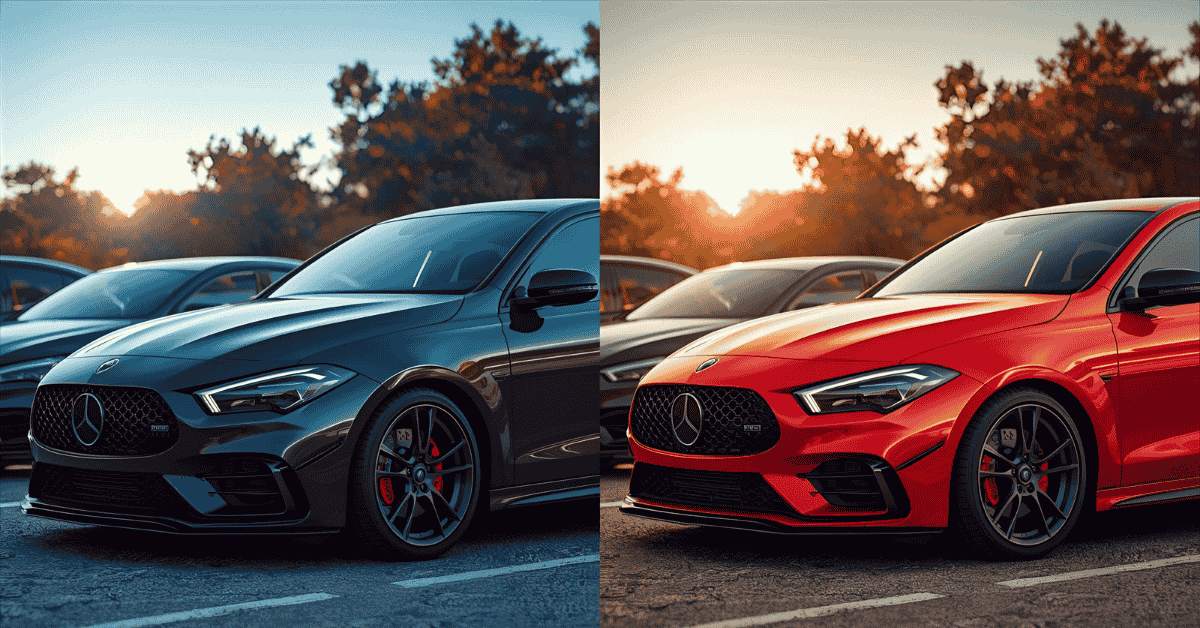
Application of automotive film solutions can help improve the aesthetics of any vehicle. Tint percentages certainly change a vehicle’s exterior. This can affect the level of style, sophistication, and the brand perception of the vehicle. Darker shades on a vehicle can make it appear thinner and more professional, therefore giving it a modern charm. This can be a great advantage for corporate fleets, premium service vehicles, or business owners with high-end clientele. Light shades on a vehicle can also add some sophistication by emphasizing the contours and lines, but with a slight touch, so the original design isn’t lost.
Apart from color and darkness, tinting can also help in reducing light glare and increasing uniformity, a feature critical to vehicles that are often showcased or heavily photographed. Automotive film solutions allow companies to better manage the uniformity of the fleet, in turn improving the professional look of the brand and gaining more trust and visibility in the market.
Read Also: TheHakevent: The Best Online Event
Improving Safety and Comfort with Tinting
One of the most important tinting benefits is both a practical and cozy benefit. The darker the tint shade, the more slot lasers it absorbs. It can dramatically lower the temperature within the cabin and reduce the load of the AC unit. These savings become particularly important for B2B operators with electric fleets who spend a significant portion of their budget on electric vehicles and traditional engine fuel consumption.
Some of them include film tinting—the interior of the cabin is shielded from the sun and the harmful ultraviolet rays of rays. It also cuts down on glare dramatically. Keeping glare down reduces driver fatigue and improves safety overall. It also reduces the dry sun and allows for more reliable driving. For commercial fleet operators and fleet managers, the lower maintenance budgets, reduced interior fading, and improved overall passenger experience are salient selling points that improve the profit margins.
Regulatory Aspects of the Percentage of Tint
When determining the tint percentages for vehicle windows, B2B companies are also required to consider the window tinting regulations for different parts of the world, especially the degree of darkness allowed on the front windshields and side windows. It is crucial for companies offering automotive film services to understand the regulations to avoid being fined, held liable, or disrupted in their operations.
As an example, fleet operators or automotive service providers are required to ensure all the vehicles in their fleet comply with the local VLT regulations, while also trying to achieve the intended comfort and aesthetic benefits. It is possible for companies offering automotive films to comply with the legal film tinting regulations, and to also satisfy the expectations of their clients, all while being on different ends of the film tinting spectrum.
Read also: FTAsia Economy Technology Updates: Their Role
Getting More Value from Automotive Film Solutions
It is an intelligent choice for B2B companies to make an investment in quality automotive film solutions, especially those that focus on boosting the ease of use, performance, while also enhancing the vehicle’s aesthetic value. Maintaining the percentage of tints within suitable ranges is crucial when considering the operational environment, the intended use of the vehicle, and customer preferences.
Different tint percentages offer different solutions to different applications, and therefore, automotive films do offer ready-made solutions. B2B firms in particular can use different films, shades, and other properties to achieve a specified outcome.
Consider a company that customizes commercial vehicles. They might apply a combination of darker tints to the windows of executive vehicles and lighter, high-visibility tints to the windows of delivery or service fleets. This strategy provides maximum value by enhancing the comfort of the occupants, improving the aesthetics of the vehicles, and assuring protection for a number of years. In addition, the high-end films include a number of important attributes like scratch resistance, anti-fade technology, and advanced heat blockage capabilities, ensuring that the investment rewards the owner for a number of years.
The automotive films applied to a vehicle (and done properly) also help to increase the resale value. Vehicles that have been tinted and protective films applied by professionals, along with the automotive films, help to improve the quality of the interior, lessen the exposure to UV damage, and have a more overall polished look. All of these factors together make the vehicle more appealing to what is considered the secondary market. All these benefits can be taken advantage of by B2B providers to help them position their company as a reliable and trustworthy service provider for fleet management and for other services like commercial vehicle alteration and automotive enhancement.
Conclusion
In the scope of the automotive industry, businesses have to deal with it. Everyone in the industry must understand automotive film solutions to be able to utilize the optimal film for their clients. Tinting changes a vehicle’s aesthetics, the comfort of the occupants, the vehicle’s safety, and the regulation’s compliance. Reasonable tint percentages that can be reached of different tints enable companies to, first and foremost, enhance a vehicle’s value and, in addition, provide good customer service as well as remain competitive in the market.
Automotive films are flexible instruments that help businesses align operational features and brand positioning. B2B operators are focused on supporting clients by ensuring the provided services meet certain criteria and offer operational efficiency and profit on a sustained basis. Heat and style management and UV protection, and uniformity, with the appropriate mix of tints, are able to make a high-performance, great-looking vehicle with any set of criteria.
Read Also: Best Image to Video AI and Lip Sync of 2025